


Can You Put an Insulated Tumbler or Bottle in the Freezer (or Microwave)?
Can You Put an Insulated Tumbler or Bottle in the Freezer (or Microwave)?
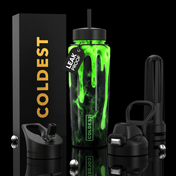
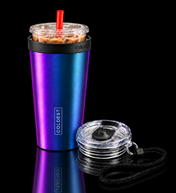
No and no. Coldest's care instructions say do not freeze or microwave the bottle. Freezing liquid expands (water's density drops about 9% as it freezes, per USGS) and can stress the walls, lid, and seal; and stainless steel is metal, which microwaves reflect — the FDA advises against metal in microwave ovens, and USDA FSIS notes metal can spark. For colder drinks, pre-chill with ice water instead; vacuum insulation does the rest.
People try the freezer for an "extra cold" pre-chill or overnight frozen bottle, and the microwave to reheat coffee in the cup. Below: why Coldest says no for both, what to do instead, and what to check if you already tried it. Related care: dishwasher FAQ (hand wash only). How long drinks stay cold → how long insulated bottles stay cold.
Can you put an insulated tumbler in the freezer?
No. Coldest product page Care & Warnings state Do not freeze. The same answer applies if you searched "can you put insulated water bottle in freezer" or want to freeze water in the bottle overnight.
Why freezing a sealed vessel is a bad idea
Water expands when it freezes. Per the USGS Water Science School, ice is about 9% less dense than liquid water — so a full, sealed bottle has nowhere for that expansion to go. That pressure can stress the lid, gasket, threads, and walls. A bottle frozen solid also isn't drinkable until it thaws.
Why it doesn't even help much
The same vacuum gap that keeps cold in also keeps freezer cold out of your drink. Pre-freezing an empty cup mostly chills the outer wall and lid — it is not a shortcut past ice + insulation. For the mechanism in plain language → how vacuum insulation works. And don't freeze a sealed Coldest as a TSA "frozen liquid" trick either → can you bring an insulated water bottle on a plane.
Can you microwave a stainless steel tumbler?
No. Coldest product page Care & Warnings state Do not microwave. Stainless steel is metal. The FDA explains that metal pans generally shouldn't go in a microwave because microwaves reflect off metal, heat unevenly, and can damage the oven; USDA FSIS notes metal can cause arcing (sparks). The vacuum wall also means the drink wouldn't heat well anyway.
Lids (Sports / Sip / Chug — "straw" = Sip) are not built for microwave use either. Keep the whole bottle — body and lids — out of the microwave. No exceptions for "lid off" or "quick zap."
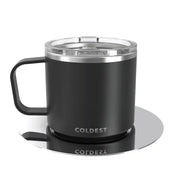
Coffee tip: reheat in a microwave-safe mug, then pour into the tumbler and close the lid to hold heat (Coldest rates 13+ hrs hot). More → how long insulated bottles stay cold.
Better ways to get (and keep) drinks ice-cold
Skip the freezer. Practical habits that fit Coldest care:
- Pre-chill with ice water — fill for a few minutes, dump, then add fresh ice + your drink.
- Fill ice high — ice ratio matters for hold feel; why → how long insulated bottles stay cold.
- Start cold — fridge-chilled liquid is fine; the freezer is the no.
- Keep the lid seated — a slightly open path dumps cold fast; seal check → leakproof tumbler checklist; lids → straw lid vs chug lid.
- Skip direct sun / hot car when you can — ambient heat melts ice faster; hours context → how long insulated bottles stay cold.
Coldest product pages state 36+ hours cold / 13+ hours hot.
Better ways to keep coffee hot
- Optional preheat — hot tap water for a minute, dump, then add coffee.
- Reheat in a mug — not in the tumbler; pour back when ready.
- Close the lid — Chug or Sports seated; hours → how long insulated bottles stay cold (13+ hrs hot).
Already froze or microwaved it? What to check
Gentle owner observations only — no lab tests, no hot-water dunks of sealed vessels, no microwave "checks."
After a freezer mishap: let it thaw at room temperature. Check lid threads and gasket seat, and look for bulges, cracks, or a lid that won't seal. Leak check → leakproof tumbler checklist. If hold feels much worse than your normal afterward → why tumbler stopped keeping cold. Visible bulge or dent → does a dent mean the vacuum failed.
After a microwave mishap: stop immediately if you see sparking; let it cool before handling; inspect the finish and lid. If anything is warped or the lid won't seal, stop using that part. Performance triage → why tumbler stopped keeping cold.
Freezer vs dishwasher vs cold car
This guide covers putting the bottle itself in the freezer or microwave. Dishwasher care is separate: Coldest Limitless and Go are hand wash only → can you put an insulated tumbler in the dishwasher. Leaving water in a freezing car overnight is a different scenario (insulation delays cold exposure but doesn't prevent it) → will water freeze in an insulated bottle. Flying? Don't freeze a sealed Coldest to get through security → can you bring an insulated water bottle on a plane.
Coldest care at a glance
Same Care & Warnings on Coldest product pages:
- Hand wash only to protect the finish
- Do not freeze
- Do not microwave
Limitless Ultra 36oz / 46oz
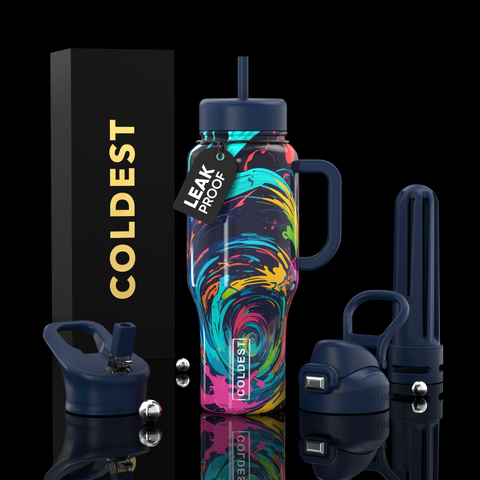
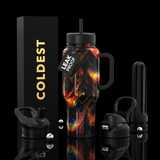
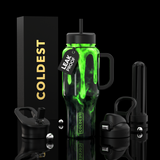
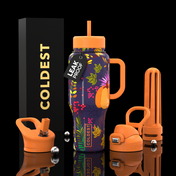
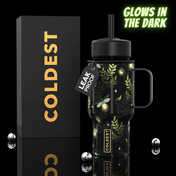
36oz Limitless and 46oz Limitless publish the same freeze/microwave care. Want a handle? → Limitless bottles with handle. Coldest’s handle bottles come in 36oz and 46oz Limitless.
32oz Go Series
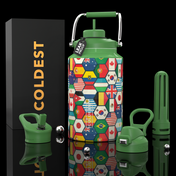
32oz Go Series shares the same care.
Shop the bottles:
FAQ
Can you put an insulated tumbler in the freezer?
No. Coldest's care instructions say not to freeze the bottle. Liquid expands as it freezes, which can stress the lid, seal, and walls — and the vacuum insulation keeps freezer cold from reaching your drink anyway. Pre-chill with ice water instead.
Can you freeze water in a stainless steel insulated bottle overnight?
Not in a Coldest bottle — don't freeze it. Water's density drops about 9% when it freezes (USGS), so a full bottle has nowhere for that expansion to go. Fill it with ice and cold water in the morning; insulation holds it cold for hours (how long insulated bottles stay cold).
Can you microwave a stainless steel tumbler?
No. Stainless steel is metal, and the FDA advises against metal in microwave ovens because microwaves reflect off it and can damage the oven; USDA notes metal can spark. Coldest care says do not microwave. Reheat in a microwave-safe mug, then pour.
What's the best way to pre-chill a tumbler?
Fill it with ice water for a few minutes, dump it, then add fresh ice and your drink. Start with cold liquid and keep the lid seated.
Can the lid go in the freezer or microwave?
No — keep the whole bottle, lids included, out of both. Lids are hand wash only like the body (dishwasher FAQ).
I already froze mine. Is it ruined?
Not necessarily. Let it thaw at room temperature, then check that the lid still seals and there's no bulge or crack. If it holds cold much worse than before, use the performance-drop checklist; for a visible bulge or dent, see does a dent mean the vacuum failed.
Closing
Can you put an insulated tumbler or bottle in the freezer — or the microwave? On Coldest, no and no — Care & Warnings say do not freeze or microwave. Pre-chill with ice water; reheat coffee in a mug, then pour. Related care → dishwasher FAQ; hours → how long insulated bottles stay cold. Shop: 32oz Go · 36oz Limitless · 46oz Limitless · Limitless bottles with handle.


