


Will Water Freeze in an Insulated Bottle? (Cold Car / Winter Hike)
Will Water Freeze in an Insulated Bottle? (Cold Car / Winter Hike)
Insulation delays freezing — it does not prevent it. In a cold car or on a winter hike, vacuum insulation keeps water liquid longer than a thin bottle would, but sustained below-freezing air can still freeze it. Coldest care says do not freeze the bottle, so bring it indoors when you can, keep it partly full, and carry it inside your pack.
Putting a bottle in the freezer on purpose is a different question, covered in can you put an insulated tumbler in the freezer. This page covers accidental cold: a car overnight, a winter commute, or a cold trail.
Will water freeze in an insulated water bottle?
Yes, eventually — if the air around it stays cold enough for long enough.
A vacuum-insulated bottle has an empty gap between its inner and outer walls. That gap slows heat moving in either direction (how vacuum insulation works). Slowing isn't stopping: with sustained below-freezing air, the cold wins over time.
Cold-hold hours on a product page describe normal use, not a countdown to freezing. See how long insulated bottles stay cold.
Cold car vs. kitchen freezer: two different questions
- Putting the bottle in a freezer (or microwave) on purpose. That's covered in can you put an insulated tumbler in the freezer. Short version: Coldest care says no to both.
- Leaving water in the bottle somewhere cold by accident. A car overnight, an unheated garage, or a winter hike. That's this page.
The care rule is the same either way. Coldest product pages say do not freeze the bottle, so preventing a freeze is always better than dealing with one afterward.
Why a freeze inside the bottle is a care issue
Water expands when it turns to ice. According to the USGS Water Science School, ice is about 9% less dense than liquid water.
In a nearly full, sealed bottle, that extra volume has nowhere to go. It pushes on the lid, the gasket, the threads, and the walls. That stress is the reason the care instructions say not to freeze the bottle.
If a freeze does happen and you later notice a bulge or dent, see does a dent mean the vacuum failed. If it seems to hold cold worse than before, walk through why a tumbler stopped keeping cold.
How to reduce freeze risk in a cold car or on a winter commute
- Bring the bottle indoors overnight. An unheated garage or a trunk still counts as cold exposure.
- Don't leave it brim-full and sealed. If it has to stay out for a while, leave some headspace so any ice has a little room. That's damage reduction, not permission to freeze it.
- Start with room-temperature or lightly warm water. Don't use very hot water, and seat the lid carefully: Coldest product pages warn to use extreme caution with hot liquids because pressure can build.
- Keep it in the warmest spot you can. A bag on the seat is a better spot than the floor or against a window.
Winter hike and outdoor carry habits
- Pack it, don't hang it. Keep the bottle inside your pack with your spare layers or jacket instead of clipped to the outside in the wind.
- Keep it closer to you. Carrying it nearer your body layer, when that's comfortable, keeps it out of the coldest air. Wrapping adds another layer of insulation outside the vacuum wall (why that helps).
- Drink as you go.
- Keep the lid clear. If you notice ice crust near the lid, bring the bottle somewhere warmer or warm it in your hands. Never put it in a microwave.
Already froze overnight? What to do
- Bring it indoors and let it thaw at room temperature.
- Don't force it. No dunking in very hot water, no oven, and no microwave — Coldest care says do not microwave.
- Check it once it's thawed. Check the lid threads, gasket and seal, and look for any bulge or crack. A quick leak check: leakproof tumbler checklist.
- Watch how it performs. If it holds cold much worse than usual, see why a tumbler stopped keeping cold. For a visible bulge or dent, see does a dent mean the vacuum failed.
Coldest care at a glance
From Coldest product pages' Care & Warnings:
- Hand wash only to protect the finish.
- Do not freeze.
- Do not microwave.
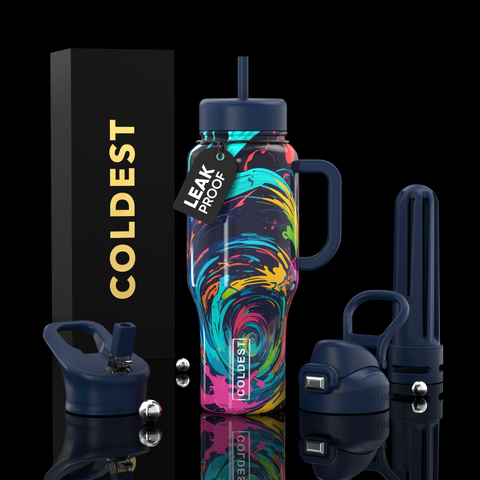
32oz Go Series
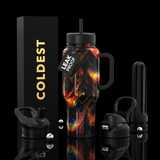
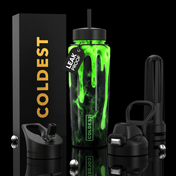
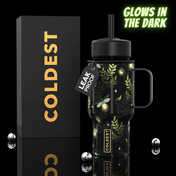
The 32oz Go Series has triple-wall vacuum insulation (up to 36+ hrs cold / 13+ hrs hot), pro-grade 18/8 stainless steel and BPA-free lids.
36oz and 46oz Limitless Ultra
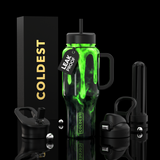
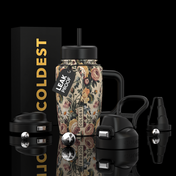
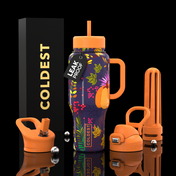
The 36oz Limitless and 46oz Limitless use the same triple-wall vacuum insulation, rated up to 36+ hrs cold / 13+ hrs hot, and the same care. Browse handle options in the Limitless bottle with handle collection.
FAQ
Will water freeze in an insulated water bottle?
Eventually, yes — if the air around it stays below freezing long enough. Vacuum insulation slows heat loss, so freezing takes longer than in a thin bottle, but it doesn't stop freezing forever.
Does insulation prevent water from freezing?
No, it delays freezing. The vacuum gap that keeps drinks cold also slows how fast outdoor cold reaches the water (how vacuum insulation works). For how long bottles stay cold in normal use, see how long insulated bottles stay cold.
Will my water bottle freeze in a cold car overnight?
It can. A car parked overnight in a hard freeze is sustained cold exposure. Bring the bottle inside when you can — a full, sealed bottle left out to turn into ice is exactly what Coldest's do-not-freeze care is meant to avoid.
How do I keep water from freezing on a winter hike?
Start with room-temperature or lightly warm water (never very hot), leave a little headspace, and carry the bottle inside your pack with spare layers instead of clipped outside in the wind. Insulation buys time; habits do the rest.
What happens if water freezes inside a vacuum bottle?
Water expands as it freezes — ice is about 9% less dense than liquid water, per the USGS (USGS Water Science School) — so a nearly full, sealed bottle can put stress on the lid, seal and walls. That's why Coldest says do not freeze. Thaw it at room temperature and check it before the next use.
I left my bottle in a freezing car and the water froze. Is it ruined?
Not necessarily. Let it thaw indoors at room temperature, then check that the lid still seals and there's no bulge or crack. If it holds cold much worse than before, see why a tumbler stopped keeping cold; for a visible bulge or dent, see does a dent mean the vacuum failed.
Is leaving a bottle in a cold car the same as putting it in the freezer?
They're different situations with the same care rule. Putting the bottle in a freezer or microwave on purpose is covered in can you put an insulated tumbler in the freezer; this page is about accidental cold in a car or outdoors. Either way, Coldest care says do not freeze the bottle.
The bottom line
Insulation delays freezing; it doesn't prevent it. Bring the bottle indoors when you can, leave some headspace, and keep it inside your pack on cold days. Freezer questions → can you put an insulated tumbler in the freezer; cold-hold basics → how long insulated bottles stay cold.


