


Why Does My Tumbler Lid Sweat? (Is Insulation Broken?)
Why Does My Tumbler Lid Sweat? (Is Insulation Broken?)
Why does tumbler lid sweat? Usually condensation on lid parts that aren’t vacuum-insulated the way the double-wall body is—not proof the vacuum failed—when the body stays dry. Warm or ice-cold drink meeting cooler room or AC air, plus moisture around gaskets or a Sip/straw path, beads on those lid surfaces while the insulated vessel feels dry to the touch.
Below: why lids sweat, how to tell lid-only damp from body sweat or a performance drop, and what to do. For real hold and science context, see how long do insulated water bottles stay cold and how vacuum insulation works. Coldest bottles are hand wash only → can you put insulated tumbler in dishwasher. Shopping, sizes, lids, and cleaning → 40 oz tumbler with handle, water bottle with handle, insulated water bottle sizes, dishwasher FAQ.
Why does my tumbler lid sweat? (short answer)
Usually normal condensation on uninsulated lid parts — not a broken vacuum — when the body stays dry.
Same diagnosis if you searched “condensation on tumbler lid” or wondered “is insulation broken?” because the lid looks wet. Lids are usually separate parts without the vacuum gap that lives in the vessel walls. A wet lid with a dry stainless body is a common everyday pattern—not an automatic fail signal.
Looking for something else?
Duration → how long do insulated water bottles stay cold. Vacuum science → how vacuum insulation works. Dishwasher / clean / lids / smell → can you put insulated tumbler in dishwasher, how to clean a tumbler with straw, straw lid vs chug lid, why does insulated water bottle smell. Size / shopping → insulated water bottle sizes, 40 oz tumbler with handle, 32 oz tumbler guide.
Why lids sweat (even when insulation is fine)
Warm (or ice-cold) drink + cooler room/AC air
Moisture beads when drink temperature meets cooler humid or AC air on cooler lid surfaces. Iced drinks on a humid day or a cold vessel under desk AC can leave the same beads. That is ordinary condensation—not a vacuum report card.
Lid parts usually aren’t vacuum-insulated
Plastics, gaskets, Sip/straw path, and outer lid surfaces typically do not have the same double-wall vacuum gap as the body. The vacuum lives in the vessel walls—so lid sweat and body dryness can coexist. That’s why lid sweat ≠ broken vacuum when the body stays dry.
Straw / Sip path
Air and liquid movement through a Sip/straw path can leave damp on the lid even when the body feels dry. Sports / Sip / Chug lids each have different openings—wipe the path you used. Chooser → straw lid vs chug lid; full cleaning → how to clean a tumbler with straw.
Don’t panic over lid beads
Lid-only beads alone are usually wipe-and-go moisture.
Quick triage — lid-only vs body sweat vs performance
Use these checks in order. Lid-only moisture is the common path; body-wide wetness or a sudden hold drop is the exception.
- Lid-only wet / body dry → usually condensation on uninsulated lid parts — not proof vacuum failed; wipe and keep using.
- Body sweating / whole vessel wet → a different issue. Duration → how long do insulated water bottles stay cold; vacuum basics → how vacuum insulation works.
- Hold feels much worse than before → a performance drop; Coldest’s rated hold is 36+ cold / 13+ hot → how long do insulated water bottles stay cold.
- Visible dent after a drop → check the dent guide below; science → how vacuum insulation works.
- If cold/hot hold still feels normal and only the lid is damp → treat as lid condensation, not vacuum failure.
What to do (wipe — don’t panic)
- Wipe the lid dry with a clean cloth — lid-only condensation is usually harmless moisture.
- Keep using the vessel if the body stays dry and cold/hot hold still feels normal.
- Check seals / gasket seating if moisture pools oddly or you also see splash → leakproof tumbler checklist.
- Dig deeper only for body-wide wetness, a sudden hold drop, or a dent after impact — then use how long do insulated water bottles stay cold / how vacuum insulation works. Do not diagnose “vacuum fail” from lid beads alone.
- Care: hand wash only per Coldest product pages; dishwasher? → can you put insulated tumbler in dishwasher; straw/Sip clean → how to clean a tumbler with straw. Do not freeze or microwave.
Does lid sweat mean the vacuum failed?
Short answer: no—not when the body stays dry and hold still feels normal.
For hold factors and hour ratings (36+ hours cold / 13+ hours hot), see how long do insulated water bottles stay cold. For how the vacuum gap works in the body, see how vacuum insulation works.
Coldest care instructions
Limitless Ultra 36oz / 46oz
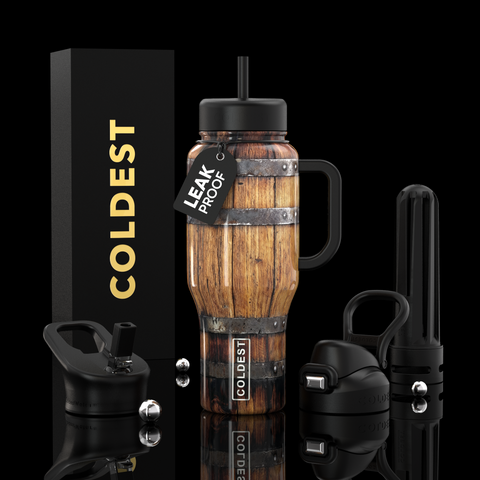
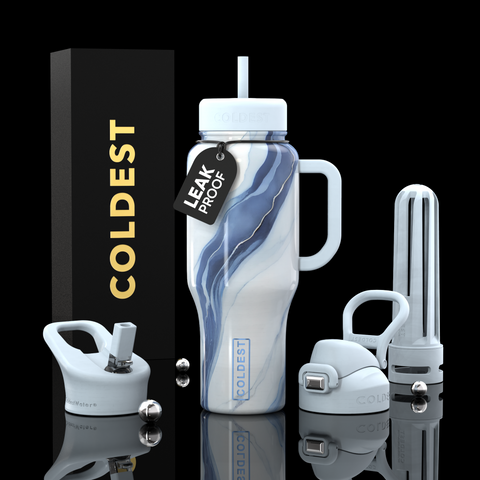
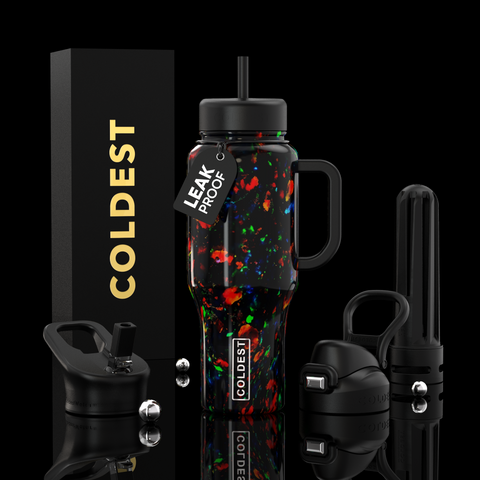
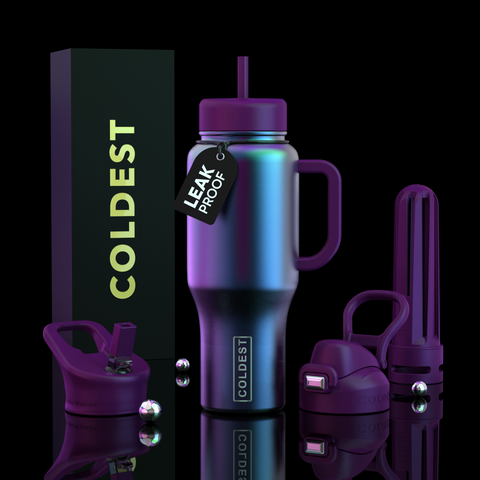
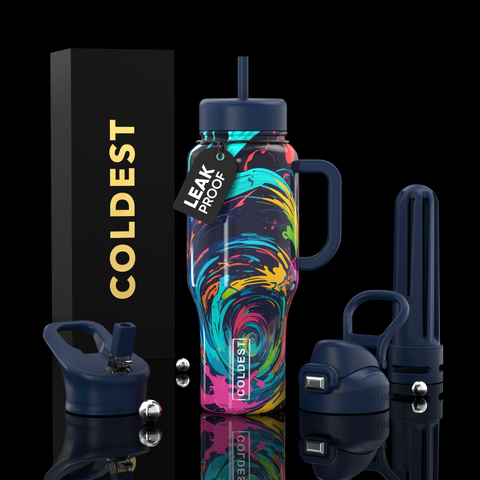
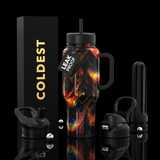
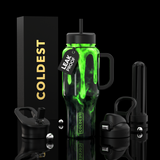
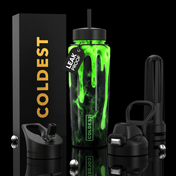
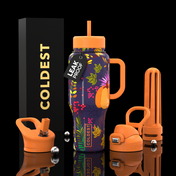
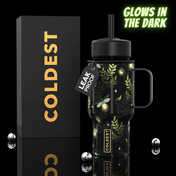
36oz Limitless and 46oz Limitless publish vacuum-insulated bodies with separate Sports / Sip / Chug lids—the body carries insulation; the lid is a removable part you wipe and reseat. Want a big bottle with a handle? → 40 oz tumbler with handle / water bottle with handle — Coldest’s handle bottles come in 36oz and 46oz Limitless. Care: hand wash only; don’t freeze or microwave.
32oz Go Series
32oz Go Series shares the same insulation ratings (36+ hours cold / 13+ hours hot on product pages) and hand wash only care. Same lid-sweat check: body dry + normal hold → wipe the lid. Mid-size → 32 oz tumbler guide.
The 24oz Limitless follows the same pattern; size hub → insulated water bottle sizes.
Lids and bottles
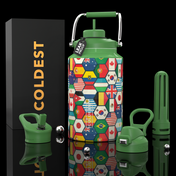
Sports, Sip, and Chug lids — the straw lid is the Sip. Chooser → straw lid vs chug lid; clean → how to clean a tumbler with straw; dishwasher → can you put insulated tumbler in dishwasher.
Related guides
- Duration → how long do insulated water bottles stay cold
- Vacuum science → how vacuum insulation works
- Clean / dishwasher / lids / smell → how to clean a tumbler with straw · can you put insulated tumbler in dishwasher · straw lid vs chug lid · why does insulated water bottle smell
- Leak / size / shopping → leakproof tumbler checklist · insulated water bottle sizes · 40 oz vs 32 oz tumbler · 40 oz tumbler with handle · 32 oz tumbler guide · water bottle with handle · cup holder friendly tumblers · tumbler vs water bottle
FAQ
Why does my tumbler lid sweat?
Usually condensation on lid parts that aren’t vacuum-insulated the way the double-wall body is—warm or ice-cold drink meeting cooler air, plus moisture around gaskets or a Sip/straw path. If the body stays dry, lid sweat is typically normal moisture, not proof the vacuum failed.
Does a sweating lid mean my insulation is broken?
Not when only the lid is wet and the body stays dry. Vacuum insulation lives in the vessel walls; lids are usually separate parts without that vacuum gap. Worry more if the whole body feels wet or cold/hot hold suddenly drops—then see how long do insulated water bottles stay cold and how vacuum insulation works.
Why does the lid get wet when the tumbler body stays dry?
The body has a vacuum-insulated double wall that resists outside condensation; many lid surfaces, gaskets, and straw/Sip paths do not. Cool drink + humid or AC room air can bead moisture on those lid parts while the insulated body stays dry to the touch.
What should I do if my tumbler lid sweats?
Wipe it dry and keep using the vessel if the body is dry and drinks still hold as you expect. Check that the lid/gasket is seated if moisture pools oddly. Dig deeper only for whole-body wetness, a sudden hold drop, or a dent after impact—duration and vacuum basics live on the guides linked above.
Is condensation on a tumbler lid normal?
Yes for many everyday conditions—especially iced drinks in humid rooms or under AC. Normal lid condensation ≠ a failed vacuum. Coldest Limitless and Go Series publish hold ranges of 36+ hrs cold / 13+ hrs hot on product pages; more on hold → how long do insulated water bottles stay cold.
When is sweating a sign I should check performance instead?
When the body is wet all over, hold is suddenly much worse than your normal, or you see a dent after a drop—those are different issues. Science → how vacuum insulation works; hours → how long do insulated water bottles stay cold. Lid-only beads alone usually mean wipe, don’t panic. Care: Coldest vessels are hand wash only — can you put insulated tumbler in dishwasher.
Dropped or dented your vessel? See → Does a dent mean my tumbler’s vacuum failed?.
Hold got worse and you’re not sure if it’s the lid or the body? See → Why did my tumbler stop keeping drinks cold?.
Closing
Why does tumbler lid sweat? Usually condensation on uninsulated lid parts—not a broken vacuum—when the body stays dry. Hold factors → how long do insulated water bottles stay cold; vacuum → how vacuum insulation works. Shop: 32oz Go · 36oz Limitless · 46oz Limitless · Limitless bottles with handle.


